Sanjo Knives: Forged by Nature, Shaped by Resilient Hands
Sanjō City, located in Niigata Prefecture, stands today as one of Japan's foremost centers of cutlery production. Yet unlike Sakai or Seki, Sanjō's story does not begin with samurai swords or courtly traditions. Instead, its identity was forged through hardship, shaped by nature, and refined by the resilience of ordinary people. What began as a small agricultural town eventually transformed into a world-class blade-making hub, not through prestige, but through perseverance.
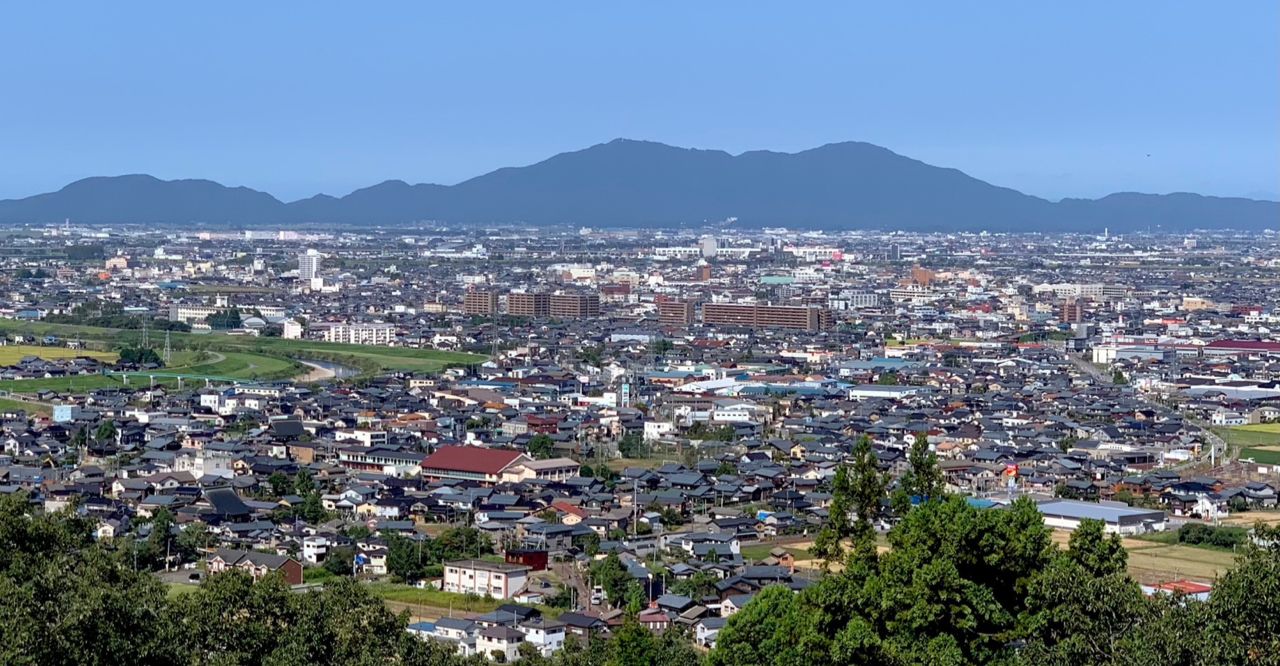
View from Osakiyama Park Terrace
Nestled between the Shinano and Igarashi Rivers, Sanjō grew in a land both generous and unforgiving. Seasonal floods repeatedly devastated the area, forcing its people to adapt or fail. Over time, these natural challenges became a quiet teacher. Abundant water proved essential for cooling and cleaning steel, while repeated disasters cultivated a mindset of patience, toughness, and harmony with nature. From this environment emerged an artisan culture grounded in practicality and endurance, one that would later earn Sanjō recognition as one of Japan's top three cutlery regions.
Sanjō's metalworking heritage began not with swordsmiths, but with nails. In 1625, local magistrate Seibei Otani invited blacksmiths from Edo to teach farmers how to forge Japanese-style nails, or wakugi, as part of a flood-relief initiative. What started as a survival effort quickly reshaped the town's future. By 1649, specialized blacksmith villages had formed, and by the Kanbun era from 1661 to 1673, Sanjō was producing an expanding range of tools such as sickles, saws, and knives used in everyday life. This practical origin, rooted in usefulness rather than status, became the foundation of Sanjō's blade-making identity.
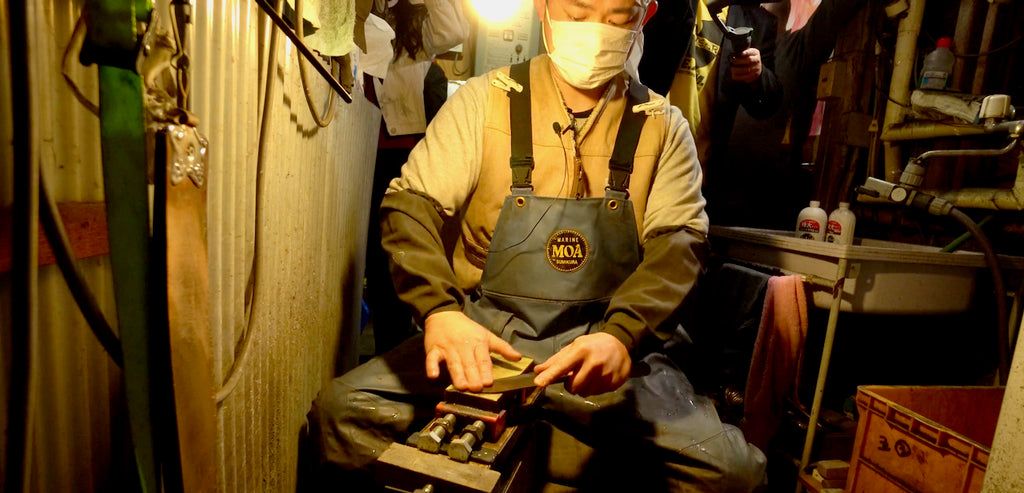
Bladesmith Naoki Mazaki - picture source from @aframestokyo
That philosophy continues to define Sanjō knives today. Unlike Sakai's single-bevel blades crafted for highly specialized Japanese cuisine, Sanjō became known for its double-edged ryōba knives made using kasumi-hari awase construction. These balanced blades are easier to control, more forgiving in use, and versatile across cooking styles. Whether slicing meat, chopping vegetables, or preparing Western dishes, Sanjō knives are tools designed for real kitchens, used by professionals and home cooks alike around the world.
What makes Sanjō truly rare among Japan's knife-making regions is its ability to embrace both tradition and modernization without conflict. The region produces hand-forged blades known as uchihamono and stamped blades known as nukihamono side by side. Forged knives, hammered patiently by skilled blacksmiths, balance hardness, resilience, and sharpness. Known as Echigo Sanjō Uchihamono, these include gyuto, santoku, and intricate Damascus steel blades that carry both function and quiet artistry. At the same time, following World War II, Sanjō pioneered stamped stainless steel kitchen knives using press machines to deliver consistent quality at accessible prices. This innovation helped bring reliable Japanese knives into everyday households and positioned Sanjō as a leader in stainless steel cutlery.
Rather than replacing craftsmanship, industrial efficiency expanded Sanjō's reach. Small family-run workshops continued to pass down techniques through generations, while local factories specialized in forging, sharpening, and handle fitting. This collaborative ecosystem allowed Sanjō to grow without losing its soul, ensuring that each blade still carried human judgment even when produced at scale.
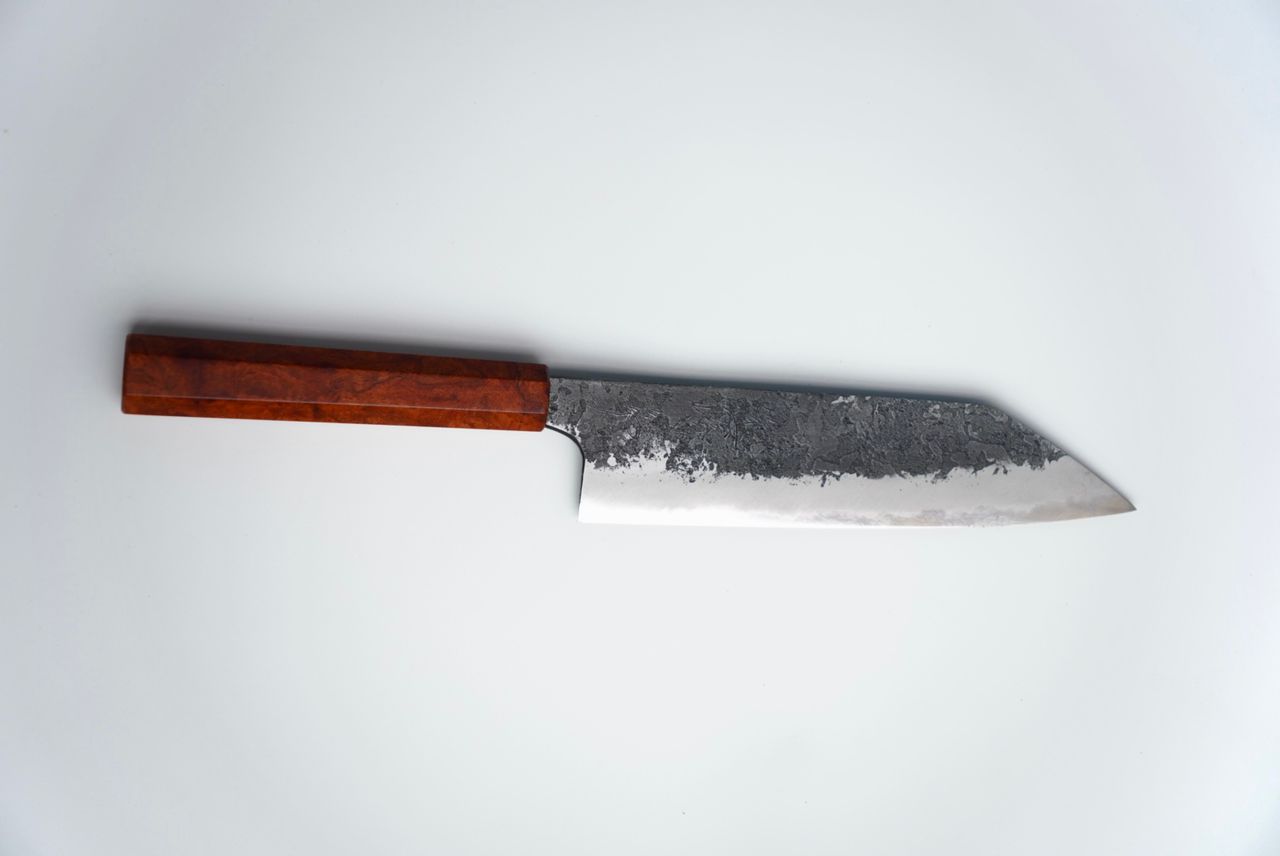
Naoki Mazaki Shirogami 2 Bunka 180mm attached with local wood, Perah Burl, can be purchased in our store
Today, Sanjō remains a living craft region. In 2009, Echigo Sanjō Uchihamono was officially designated a Traditional Craft of Japan, acknowledging its cultural and historical importance. At the same time, Sanjō's makers continue to innovate, working with VG-10 stainless steel, Damascus patterns, outdoor blades, and Western-style designs. Artisans launch their own brands, collaborate with chefs worldwide, and adapt to modern kitchens while staying true to their roots.
Sanjō knives are celebrated for their durability, versatility, and quiet reliability. Each blade reflects the individuality of its maker, forged through careful hammering that strengthens the steel and resists wear. Born from floods and forged by necessity, Sanjō's blade-making tradition is not static history. It is a living culture that continues to evolve. From humble nails to knives trusted in Michelin-starred kitchens, Sanjō embodies craftsmanship shaped by nature and perfected through resilience.